Best time to visit Makgadikgadi: two different goals
There is no single best time to visit Makgadikgadi, because dry salt flats and rain-fed wildlife are different priorities. Dry pans suit quad rides and nights out on the surface, which one operator describes as a dry-season activity. Rain brings water, grazing and bird life, but it also makes the pans and the tracks around them risky.
The official Botswana tourism pages describe a landscape that changes sharply between a dry and a wet visit. Good summer rains can flood pans, with water arriving in the east through the Nata and other seasonal rivers. Nothing here is a promise, since rainfall differs from year to year and from pan to pan.

A route that visits the pans
This five-day route spends one day on the salt pans, and park fees are paid separately.
Hand-picked tours, booked through Viator. Prices are indicative starting prices in US dollars (as of October 2026). Tap a tour for live availability and the current price in your currency.

Trips that run at different times of year
Compare day trips, sleep-outs and multi-day safaris and check each offer's season, starting point and inclusions. Availability changes with the weather, so confirm dates with the provider.
Makgadikgadi weather by month
These are historical averages for Maun, 1971 to 2000, supplied by Botswana Meteorological Services to the World Meteorological Organization. Maun is a neighbouring town outside the pans, so treat the numbers as a proxy only. We have no measured figures for 2026 and none for the pans themselves.
In more detail, the daily highs and lows run like this: January 32.2 and 19.8 °C with 109.4 mm of rain, February 32.1 and 19.6 with 97.0, March 31.9 and 18.7 with 67.0, April 30.7 and 15.9 with 24.5, May 28.4 and 11.0 with 4.9, June 25.7 and 7.7 with 0.7, July 25.6 and 7.5 with 0.1, August 28.8 and 10.3 with 0.4, September 32.8 and 15.3 with 3.0, October 34.5 and 19.1 with 15.8, November 34.0 and 19.8 with 47.0, and December 32.9 and 19.9 with 78.8. Pack for heat, sun and very cold early mornings in midwinter.
Dry season and the salt pans
From May to September Maun's averages show minimal rain, which is when the surface is most likely to be firm. The UK Foreign Office travel advice for Botswana describes November to March as the rainy season, with flash-flood risk and dangerous roads. That is a country-wide statement, not a fixed closing date for any one pan.
A firm-looking crust is not proof that it will carry a vehicle, and even modest rain can make a crossing impossible. If you want to drive across the surface, read the self-drive guide and the salt pans page first, and use a guide for any deep crossing.
Wet season and wildlife
Zebras
Research documents zebras depending on water along the Boteti River in the dry season and using the pan grasslands in the rains. A research abstract describes zebras in the national park from April to October, moving between grazing and river water. Individual animals and unusual rain years can depart from a simple seasonal route, so a sighting is never guaranteed. For detail, see the wildlife guide.
Meerkats
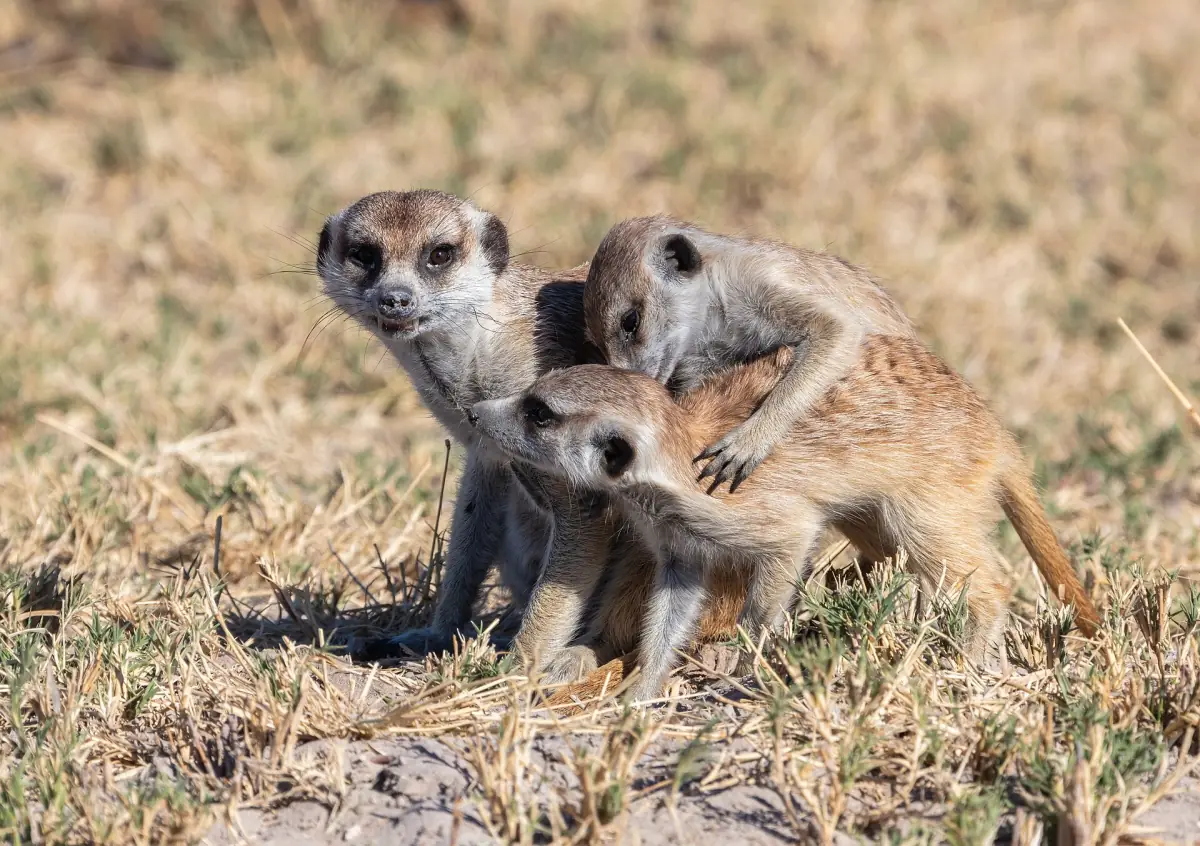
Habituated meerkat groups live on the pans and can be seen on guided visits. Habituated means used to people, not tame. Do not touch or feed them, and expect no guarantee that a group will appear on a given day.
Flamingos and other water birds
When there is water in the pans, the Nata Bird Sanctuary offers habitat for flamingos, pelicans, ducks and geese. It is a community reserve run by Nata, Maphosa, Sepako and Manxotae, not a part of Nxai Pan. No fixed breeding months apply independent of water.
Nxai Pan and Kubu Island timing
Botswana Tourism recommends the neighbouring Nxai Pan National Park from December to April in years of good rain. Nxai is a separate park north of the Maun to Nata road, covered on its own page. Kubu Island is reached across the Sua Pan, and the operator has reported reopening after rain, which means access is not constant. Check the surface before you set off.
Gates follow set hours in the older regulations, and a current gate notice overrides them. Costs and entry rules sit on the park fees page.
Health and heat
The CDC lists Boteti among the districts with malaria transmission, so the pans should never be treated as malaria-free. Speak to a travel medicine clinic well before you leave. In the heat, adjust your activity, drink enough, and use sun protection and suitable clothing. We found no valid universal litre figure, so plan water for your route and your reserve.
Timing questions
When is the dry season?
Maun's long-term averages show almost no rain from May to August, with rain building again from September. The pans can differ from Maun.
Can I see zebras all year?
No. Their movements follow water and grazing, and nothing guarantees a sighting at a particular time.
Are the weather figures current?
No. They are 1971 to 2000 averages for Maun, used as a nearby proxy.
Is this an official tourism site?
No. This is an independent guide, not the website of DWNP or Botswana Tourism.