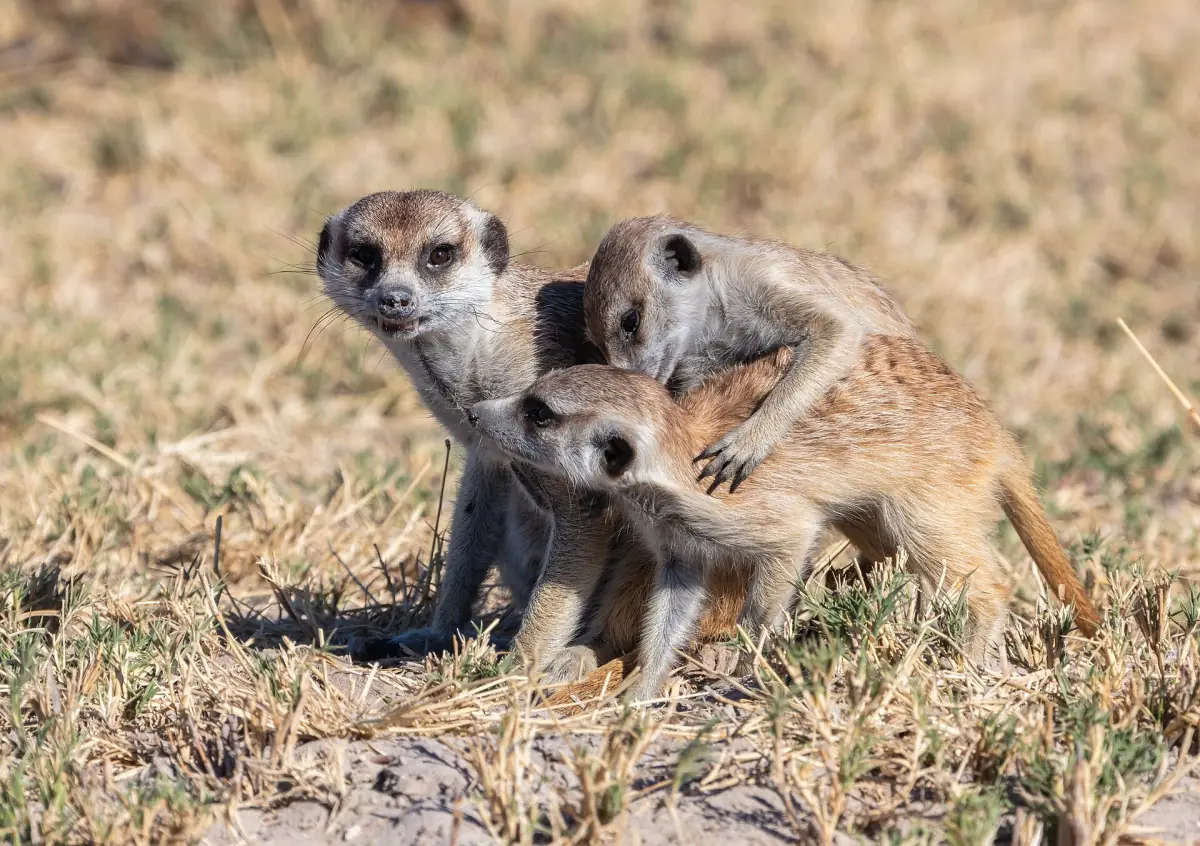
Makgadikgadi wildlife follows the water
Makgadikgadi wildlife is shaped by one question: where is the water this month? The pan complex is a vast, sparsely vegetated salt landscape, and animals move between the grasslands at its edges and the few reliable water sources. In the dry months the Boteti River on the western side matters most. After good summer rain the grasslands around the pans open up and the picture changes again.
That is why no honest guide can promise a particular animal on a particular day. The Makgadikgadi National Park covers only the western end of Ntwetwe Pan and the grassland running to the Boteti. The wider salt pans are a separate landscape with different chances.

Our take: wildlife-focused options
The day trip is the easiest way to spend time in the park itself. The longer safaris add Okavango or Nxai Pan days, and none of them can promise particular sightings.
Hand-picked tours, booked through GetYourGuide and Viator. Prices are indicative starting prices in US dollars (as of October 2026). Tap a tour for live availability and the current price in your currency.

Zebra safari with the pans and Okavango Delta
- Breakfast, lunch and dinner
Two days cover Makgadikgadi Pans National Park, the rest is spent in the Okavango Delta. The first night in Maun is at your own expense. One review so far.
Check availability →
Camping safari to Nxai Pan and the national park
- Breakfast, lunch and dinner
One night in Maun, one in Nxai Pan and the remaining days in Makgadikgadi Pans National Park. No reviews yet.
Check availability →
Zebra-season game drive in the national park
- Park fees
- Guide and game drives
- All meals included
One day in Makgadikgadi Pans National Park with transfers from your accommodation. Park fees are part of the booking.
Check availability →Wildlife outings in the Makgadikgadi area
Compare day trips and longer safaris, and check pickup place, includes and group size before you book.
Zebra migration along the Boteti
Research on the Makgadikgadi zebra describes a route-based movement between grazing grounds and distant water. One study recorded zebras in the national park from April to October, walking repeatedly between pasture and river water. Another peer-reviewed study looked at movements between the Okavango and Makgadikgadi areas. Both show that the animals respond to rain and water, and that individual animals and unusual rainfall years can break any simple seasonal rule.
For a visitor this means the Boteti side of the park is the natural place to look for zebra when the pans are dry. Do not expect a fixed arrival date or a herd count. Some day trips carry the word migration in their title, such as the Makgadikgadi zebra migration day trip listed on this site. A product name describes the outing, not the animals you will meet. The best-time guide compares dry-season pans with wet-season grassland.
Meerkats on the salt pans
Meerkats live on the pan edges, and some groups are habituated. Habituated means used to people, not tame. Operators describe guided encounters with habituated groups as part of camp stays, and more than one operator offers them, so no single camp has a monopoly on meerkats. The animals can still move off, and there is no guarantee that a group will be where you hope.
One of the overnight offers on this site, a sleep-out on Ntwetwe Pan with pickup in Kasane, Kazungula or Lesoma, lists meerkats only as a possible sighting. Treat that wording as the realistic standard for every tour. If you meet a group, stay with your guide, keep your hands to yourself and do not offer food.
Flamingos and birds at the Nata Bird Sanctuary
When the pans hold water, the Nata Bird Sanctuary on the eastern edge offers habitat for flamingos, pelicans, ducks and geese. The sanctuary is run by the communities of Nata, Maphosa, Sepako and Manxotae. It is a community reserve, not a department of Nxai Pan National Park, even though some tourism pages describe it together with Nxai.
No fixed months for flamingo breeding or arrival can be given, because the water supply, not the calendar, decides. In a dry year the pans may hold no birds worth the drive. Ask locally about water levels shortly before you travel. If you are heading north, the neighbouring Nxai Pan National Park has its own wildlife season, favourable in the rains from December to April according to the tourism board, and it is a separate park with a separate fee.
Watching wildlife safely
Keep a respectful distance and follow your guide. No single minimum distance applies to every species, so the guide's instruction counts more than a number. Never feed or disturb animals. Camps in this region are often unfenced, so supervise children closely, and do not walk off into the bush on your own just because a salt surface looks open.
Health planning belongs here too. The US CDC lists the Boteti area among the places with malaria transmission, so the pans should not be treated as malaria free. Speak to a travel medicine clinic well before you leave. For logistics, see where to stay and what a self-drive trip requires.
Wildlife questions
Is the zebra migration guaranteed?
No. Zebra movements follow rain and water and vary between years. The Boteti side of the park is the usual place to look in the dry months, but timing cannot be promised.
Can I touch or feed the meerkats?
No. Meerkats may be habituated to people, but they are wild animals. Do not touch or feed them and follow your guide's instructions.
Will I see flamingos?
Only when the pans hold water, and not on a fixed schedule. Check conditions locally before you travel.
Is this the official park website?
No. This is an independent guide with no connection to the Department of Wildlife and National Parks, Botswana Tourism or any operator.